What grows here
The farm grows vegetables, and the garden is shaded by fruit trees, including lychee and jackfruit. The hens lay fresh eggs. What reaches the table depends on the season and on what is ready to pick, which is rather the point of eating this way.
Lychees in Nepal are an early-summer fruit, and jackfruit ripens through the warmer months. If you visit in autumn or winter, the fruit trees may be resting. Ask the hosts what is in season for your dates, and see our guide to seasonal fruit in Nepal for the wider picture.
Where you eat
On fine days, meals are often taken at the long outdoor table, with the garden around you and the hills in the distance. There is also a rustic dining area with wooden tables for cooler or wetter moments. A shared table makes conversation easy, and eating together is part of the atmosphere here.
Breakfast and other meals
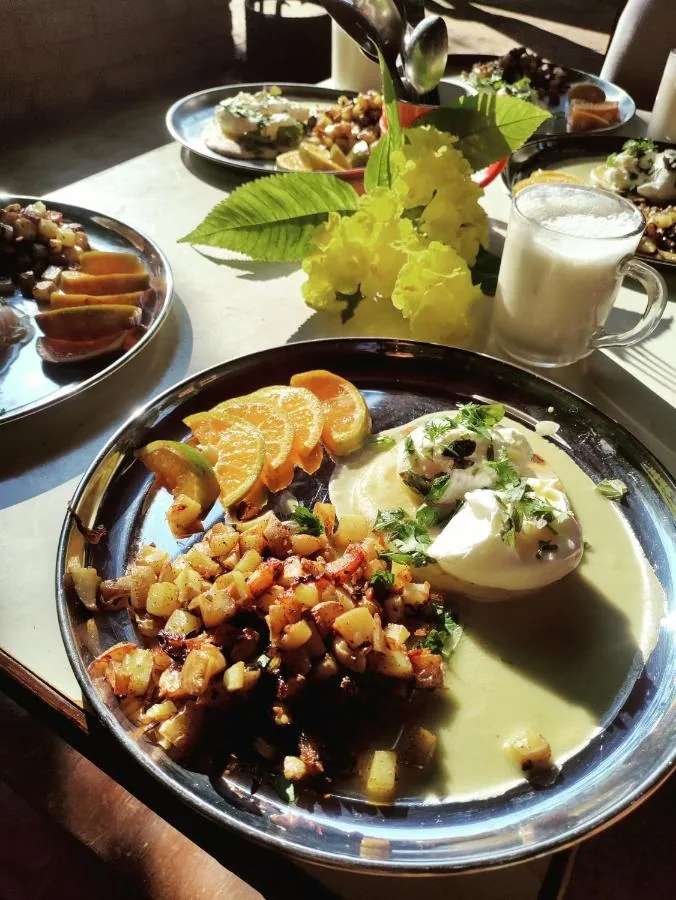
Bulbul serves breakfast; ask whether it is included in your quote. For lunch and dinner, ask the hosts what can be arranged and what is cooking. Home kitchens work best with a little notice, so let them know your plans for the day and roughly when you expect to be back.
A home-cooked Nepali meal is often built around dal bhat: lentils, rice, a vegetable curry and pickle. Whether it appears during your stay is up to the kitchen, but if it does, our guide to dal bhat explained will tell you what you are looking at, and why a second helping is usually offered.
Dietary needs
Mention vegetarian, vegan, allergy or other dietary needs in your booking enquiry rather than on arrival. The hosts can then tell you honestly what they can accommodate. If you have a serious allergy, confirm the details directly with them before you travel, and carry anything you rely on.
If there is something you would particularly like to try, such as eggs from the farm or fruit from the trees, say so. You may not always get it, but the kitchen can only plan for what it knows about.