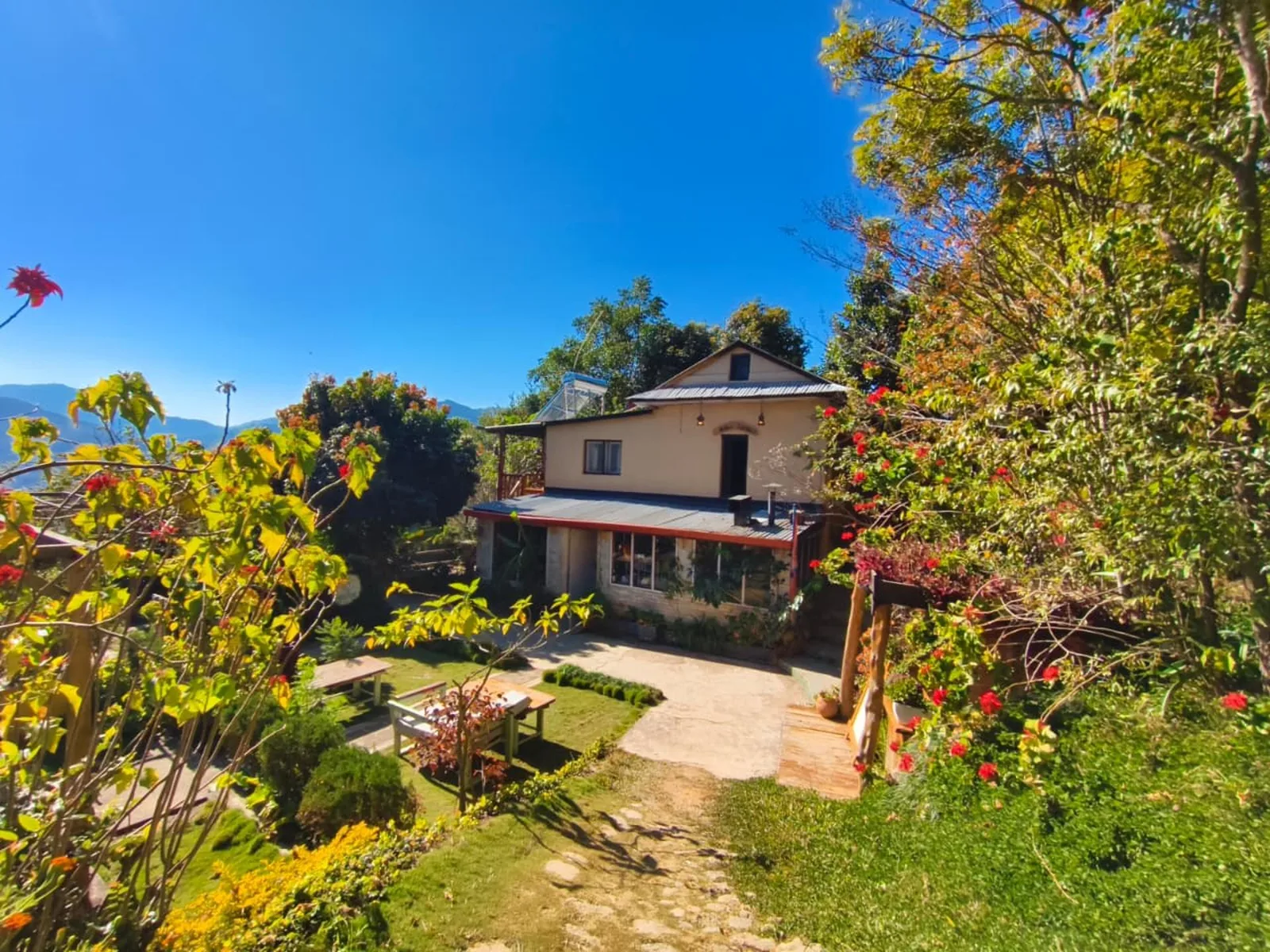
What a homestay usually means
In a homestay you stay in a family's house, often in a village, and share their daily routine. Meals are usually eaten with the family, rooms are often simple and bathrooms may be shared. In some parts of Nepal, several households in a village host visitors together as a community homestay.
Homestays suit travellers who want close contact with local life, are happy to fit around a household's rhythm and enjoy conversation, even across a language gap.
What a farmstay usually means
A farmstay puts the land at the centre of the visit: gardens, crops, animals and food grown close by. Rooms tend to be more separate from the family's living space, often closer to a small guesthouse, with time outdoors as the main draw.
Farmstays suit travellers who want a rural setting and fresh food alongside some privacy and a room of their own. Both terms are used loosely, though, and no two places are the same.
Questions to ask before you choose
Is the room private, and is the bathroom shared? Which meals can be arranged, and can they cater for your diet? How much time will you spend with the family? Is there hot water, Wi-Fi or space for children? Clear answers will tell you far more than the label.
You do not have to choose only one. Many travellers enjoy a night or two in a village homestay and a few slower days at a farmstay on the same trip.
Bulbul as a farmstay
Bulbul Farm Retreat is a farmstay near Tansen. Guests stay in a standard double room with a private bathroom, Wi-Fi, hot water and a fan, and spend their time among the gardens, fruit trees and farm animals, with home-cooked, farm-grown food. Guests are welcomed in a traditional Nepali way. Read about a farmstay in Nepal or view the rooms; the booking form sends an enquiry, and the hosts confirm availability, price and terms.