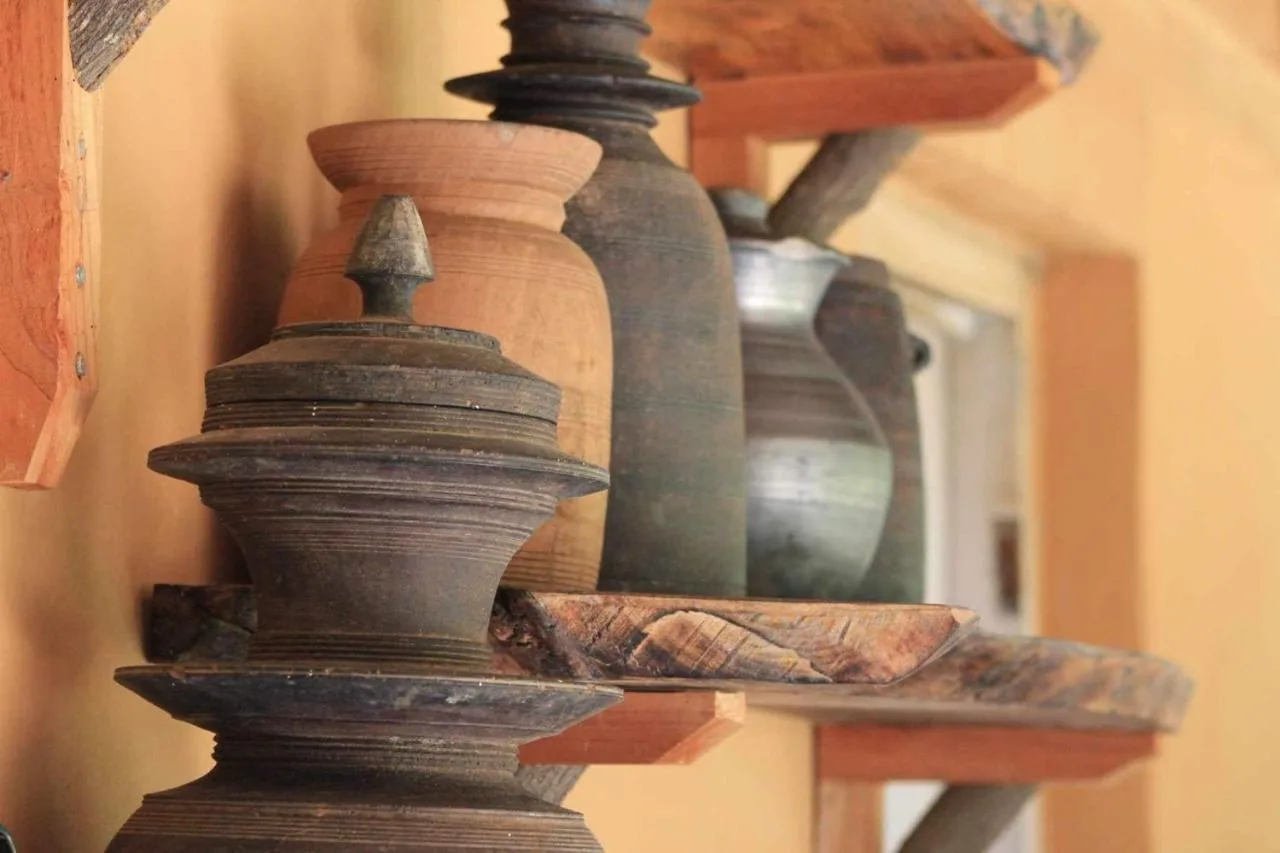
What a karuwa is for
A karuwa has a rounded body, a narrow neck and a spout. In Nepali homes it is used to pour drinking water and for washing hands before and after a meal, and it plays a part in puja and other rituals. Karuwa are also often among the gifts given at weddings, which helps explain why a well-made one is valued for decades.
Palpali karuwa have a reputation for being solid and well finished. You may notice traditional vessels like these on shelves and in kitchens around the district, sometimes passed down through several generations.
A craft with deep roots
Metalworking in Tansen has long been a family trade, with skills passed from parents to children in small workshops. The work involves shaping, hammering and polishing by hand, and the sound of it is still part of life in some parts of town.
Like many crafts in Nepal, it faces competition from cheaper factory-made goods. Buying a handmade piece, and asking about who made it, is a small way of keeping the trade going.
Buying and carrying one home
Brass is heavy, so think about your luggage allowance before choosing a large vessel. Smaller karuwa, bowls and plates make lighter souvenirs. Ask the shop to wrap your piece well, and pack it in the middle of your bag.
Brass darkens with time. Ask the seller how they recommend cleaning it; many households use lemon or tamarind. If something is sold as old, ask about its age and any paperwork, as genuine antiques can be subject to export rules.
Combine a browse of the metal shops with a search for Palpali Dhaka, and you will have seen Tansen's two best-known crafts in one morning.