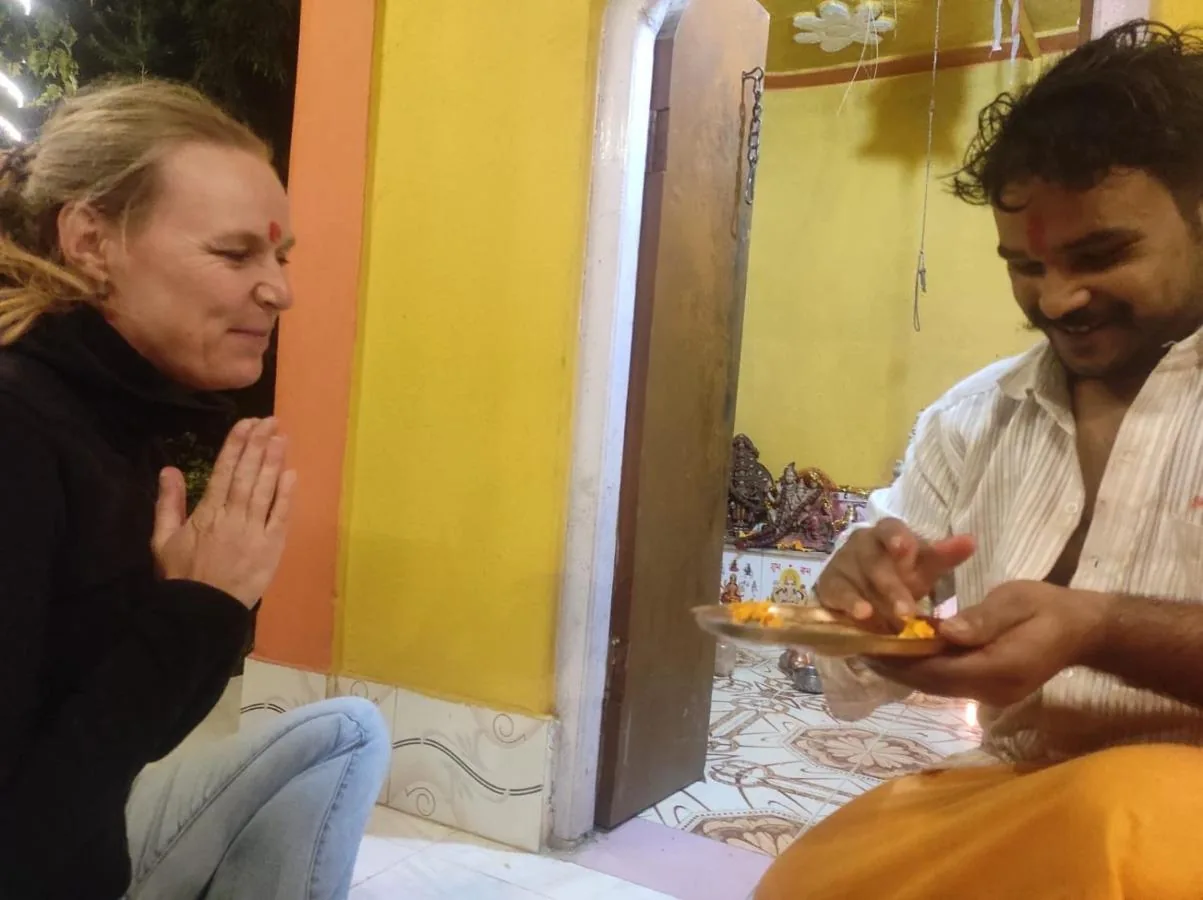
Namaste
The everyday Nepali greeting is namaste, said with the palms pressed together in front of the chest and a slight bow of the head. It works for hello and goodbye, with anyone, at any time of day. Namaskar is a more formal version, often used with elders. Returning the gesture is all you need to do.
What a welcome can include
For an arrival, a Nepali family might offer a garland of flowers, a tika on the forehead or a scarf placed around the shoulders. A tika is a mark of colour, often red, given as a blessing. Marigolds are a common flower for garlands, especially around festivals. A drink, a snack and an invitation to sit down are often part of it too.
We will leave the details of Bulbul's own welcome for you to discover on the day.
How to receive it
Accept graciously and with a smile. Bow your head slightly if someone is placing a garland or applying a tika. If you are handed something, take it with your right hand or both hands, which is polite across Nepal. It is fine to ask what a gesture means; most hosts are happy to explain.
You do not have to keep a tika on all day. Many people leave it for a while out of respect and wipe it off later. If you are offered food or drink, accepting a little is polite, but you can decline something you cannot eat. Mention dietary needs in your enquiry beforehand so nobody is caught out.
Returning the respect
Hospitality runs both ways. A namaste for neighbours on the road, taking off your shoes where others do, and dressing modestly in villages and temples are easy ways to return it. Our guide to Nepal etiquette for visitors covers more, and Nepali phrases for travellers will help you say thank you: dhanyabad.