When to look
Birds are most active in the first two hours after sunrise, when it is cool and they are feeding. Late afternoon brings a second, smaller burst of activity. Midday in the warmer months is usually quiet.
The seasons change what you see and hear. Autumn and winter tend to bring clear, settled mornings and good visibility. Spring is the season of song, as many birds pair up and nest. The monsoon makes birds harder to watch in the rain, though the hills are at their greenest.
What to bring
A pair of binoculars is the one piece of kit that makes a real difference. Something around 8x magnification is easy to hold steady. Add a small notebook, a field guide or birding app that covers Nepal, and clothes in muted colours. A cushion and a flask make a long sit more comfortable.
Birds you are likely to see
Around gardens, fields and village edges in the middle hills, a few birds are easy to find. Bulbuls chatter in fruit trees and hedges; the red-vented bulbul, with its dark crest and red patch under the tail, is a common one. Mynas walk confidently across lawns and rooftops. Drongos, dark birds with long forked tails, perch on wires and dart out after insects.
Watch the sky too, as birds of prey often circle over the ridges on warm days. To learn more about one family, start with our guide to the bulbul bird.
Where to go and how to watch
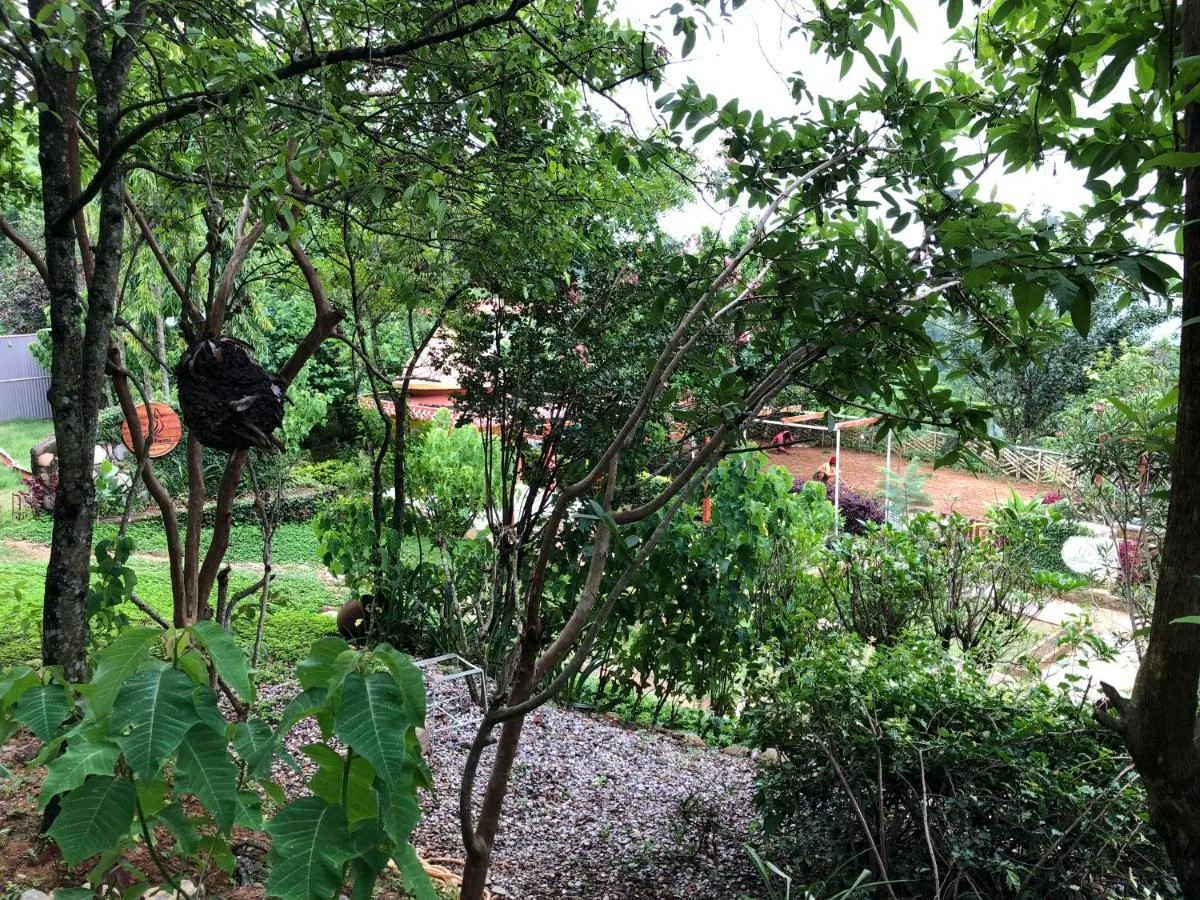
Start close to home. A quiet garden corner with fruit trees, a hedge and some open ground can be enough. At Bulbul Farm Retreat, an hour in the garden before breakfast is a gentle way to begin. Beyond the farm, the wooded slopes of Shreenagar Hill above Tansen are worth a morning walk.
Watch kindly. Keep your distance from nests, stay on paths, avoid playing recorded calls and leave wild birds unhandled. The best sightings usually go to the person who sits still the longest.