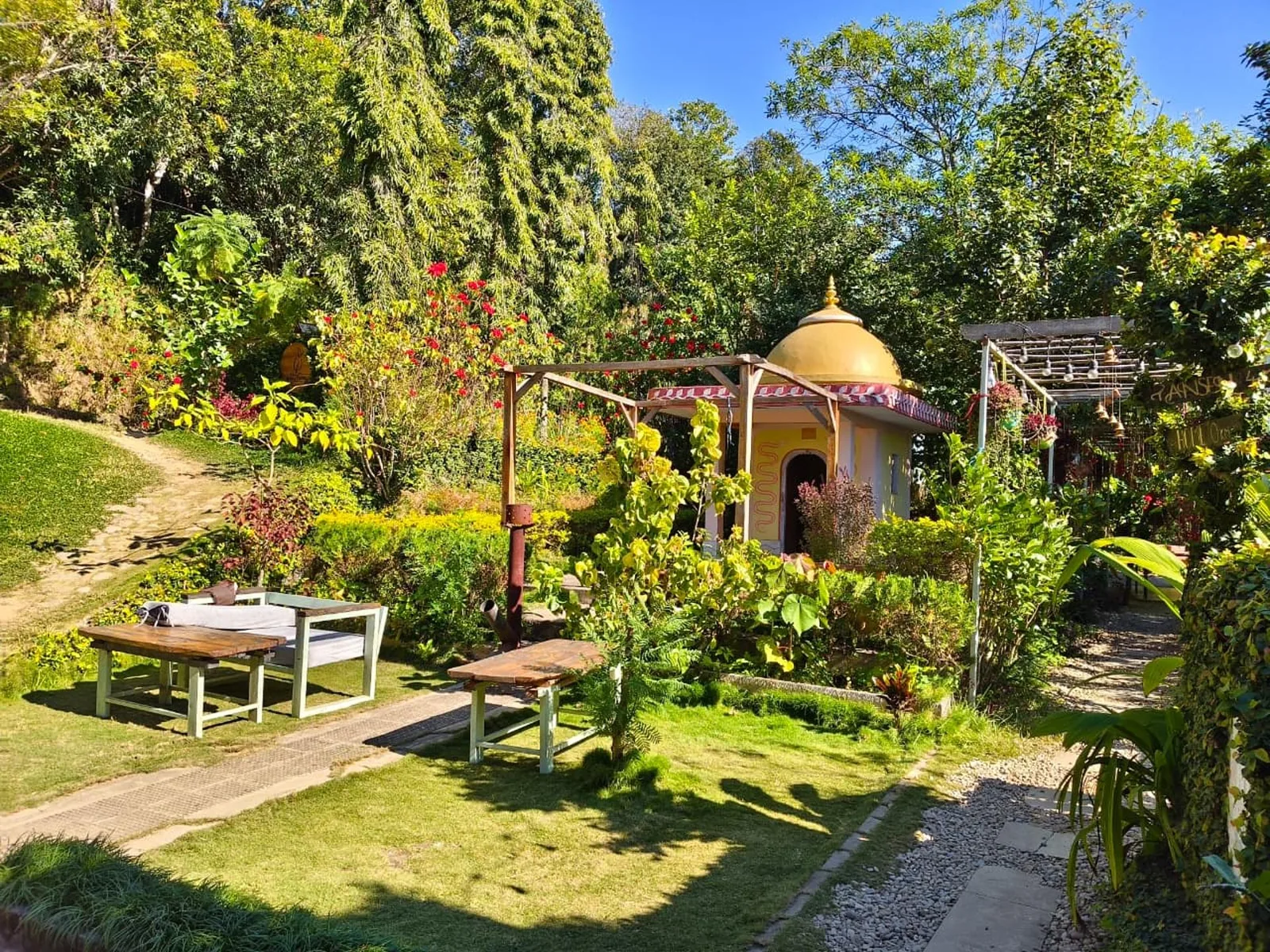
What a pati is
Across Nepal, a pati is a traditional public shelter: an open-sided rest house where travellers, porters and neighbours could stop out of the sun or rain. Many were built as acts of religious merit, and in the days before roads they lined trade routes and filled town squares.
The name Sitalpati is usually explained as a cool resting place. Its distinctive many-sided shape makes it one of the most recognisable landmarks in Tansen, and a natural reference point when you are finding your way around.
Life around the square
The square around Sitalpati is where the town meets. Early in the day you will see people heading to work and school, stopping for tea and the morning news. Later, vendors set out goods, friends linger, and the square sometimes fills for public events and gatherings.
Because everyone knows it, Sitalpati is a good place to arrange to meet travel companions or a driver. Say the name and most people will point you there.
Spending an unhurried hour
Find a spot at the edge of the square where you are not in anyone's way, buy a glass of tea from a nearby stall, and simply watch. It is one of the easiest ways to feel the rhythm of a Nepali hill town. Late afternoon light is often softest for photographs; take wide views of the square rather than pointing a camera at individuals without asking.
From here, the palace gate described in our Baggi Dhoka guide is only a few steps away, and the lanes of the old bazaar lead off in several directions.
When you have had your fill of the bustle, the pavilion and garden swing at Bulbul offer a quieter version of the same idea: a covered place to sit, talk and let the day pass.