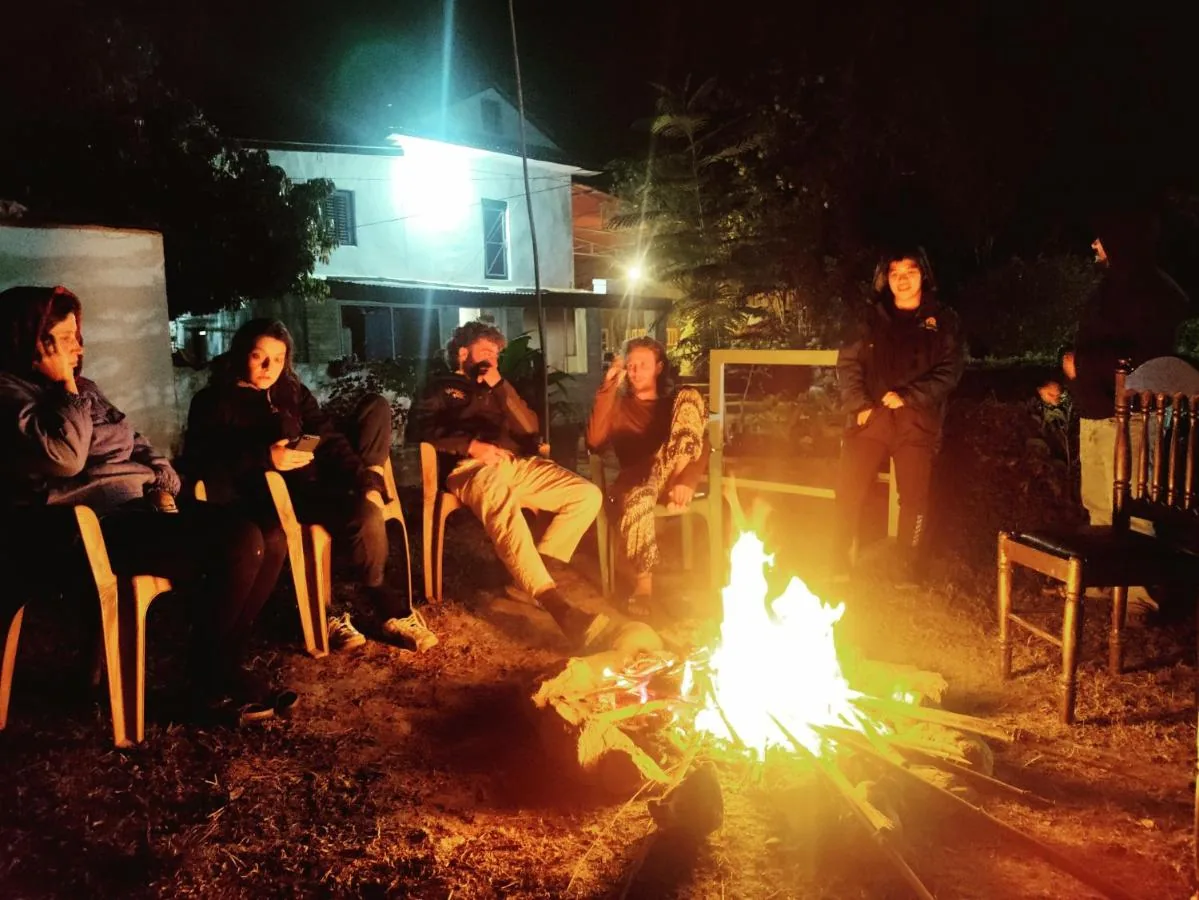
Around the fire
A fire in the garden is a natural place to gather after dinner. Conversation slows, someone may bring out an instrument, and the day gets told again. Ask the hosts whether a bonfire is planned during your stay, since it depends on the weather, the season and what else is happening on the farm.
Treat the fire with care. Keep children back from the edge, do not add anything to it without asking, and leave it to the hosts to decide when it is time to let it burn down.
When the sky is clearest
After the monsoon, from around October, the air in the hills tends to be clearer, and winter nights can be crisp and bright. Spring often brings more haze, and the monsoon months from June to September are usually cloudy. Even then, a break in the clouds can surprise you.
The moon matters as much as the weather. Around full moon the sky is bright and fewer stars show. The nights either side of the new moon are best for faint stars. If stargazing is high on your list, check a moon calendar before you choose your dates.
Seeing more stars
Give your eyes twenty minutes or so away from screens and torches to adjust to the dark. If you need light, a torch with a red setting or a dimmed phone screen helps. A star map app can help you name what you see, and even a small pair of binoculars brings out star clusters.
The darkest part of the sky is usually the part furthest from town lights. On a clear, moonless night you may still pick out far more than you would in a city.
What to wear
Hill evenings cool quickly once the sun goes down, even after a warm day. Bring a fleece or jacket, and a hat in winter. Sitting still by a fire warms your front and leaves your back cold, so an extra layer helps. Our list of what to pack for a Nepal farm stay covers the rest.